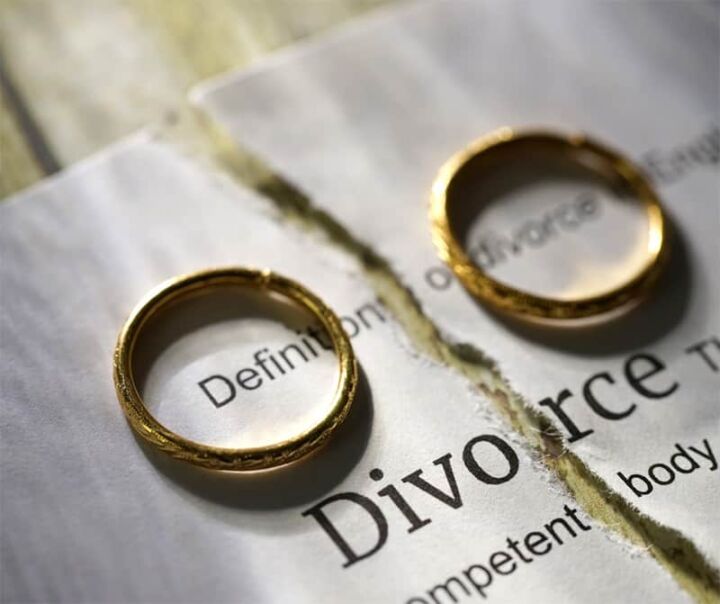
Marriage was meant to be a long lasting union wherein only death was seeing as the only reason that will separate the two. Things have changed and today we see our courts dissolving marriages by granting a decree of divorce and makes its pronouncement.
Such pronouncement also deal with what need to happen to the joint estate which comprises of both the immovable and movable assets that are acquired before and during the subsistence of the marriage. There must then be a division of joint assets unless the parties agreed otherwise.
When two parties are married to each other in community of property it simple mean that they are in universal economic partnership with each other.
All their movable and immovable assets and liabilities are merged in a joint estate, in which they, irrespective of the value of their financial contributions, hold in equal shares.
Our law expresses clearly on the aspect of the consequences of contracting into a marriage in community of property and of profit and loss which is the applicable marital regime unless the spouses contracting into marriage expressly exclude it by way of entering into an Anti Nuptial Contract (ANC).
If the spouse during a divorce wishes to seek an order for the other spouse to forfeit his or her patrimonial benefits of the marriage such must be clearly pleaded.
The court in Engelbrecht vs Engelbrecht held that “ joint ownership of another party’s property is a right which each of the spouses acquired on concluding a marriage in community of property. Unless parties, ( either before or during the marriage) , make a precisely equal contributions the one that contributed less shall on dissolution of the marriage be benefited above the other if forfeiture is not ordered. This is the inevitable consequences of the parties matrimonial property regime.”
Section 9(1) of the Divorce Act provides that: “ when a decree of divorce is granted on the ground of the irretrievable breakdown of a marriage the court may make an order that the patrimonial benefits of the marriage be forfeited by one party, in favour of the other either wholly or in part, if the court , having regard to the , duration of the marriage, the circumstances which gave rise to the breakdown thereof, and any substantial misconduct on the part of either of the parties, is satisfied that , if the order for forfeiture is not made, the one party will in relation to the other be unduly benefited.”
The only time that the court will make an order of forfeiture of benefits, either wholly or in part, is when the court is satisfied that the one party will in relation to the other, be unduly benefited.
A party claiming for forfeiture must plead all necessary facts to support that claim which falls within the grounds set out in section 9(1) of the Divorce Act. The spouse therefore must prove the extent of undue benefit by the other if order of forfeiture is not granted.
The court will only grant such an order only if satisfied and will be exercising it’s disc reaction in doing so as the Section referred to “May” other than “Must”.
The fact that one spouse contributed more and the other less cannot be a ground for forfeiture order.